

How Much Does a Microfluidic Chip Cost? A Full Breakdown
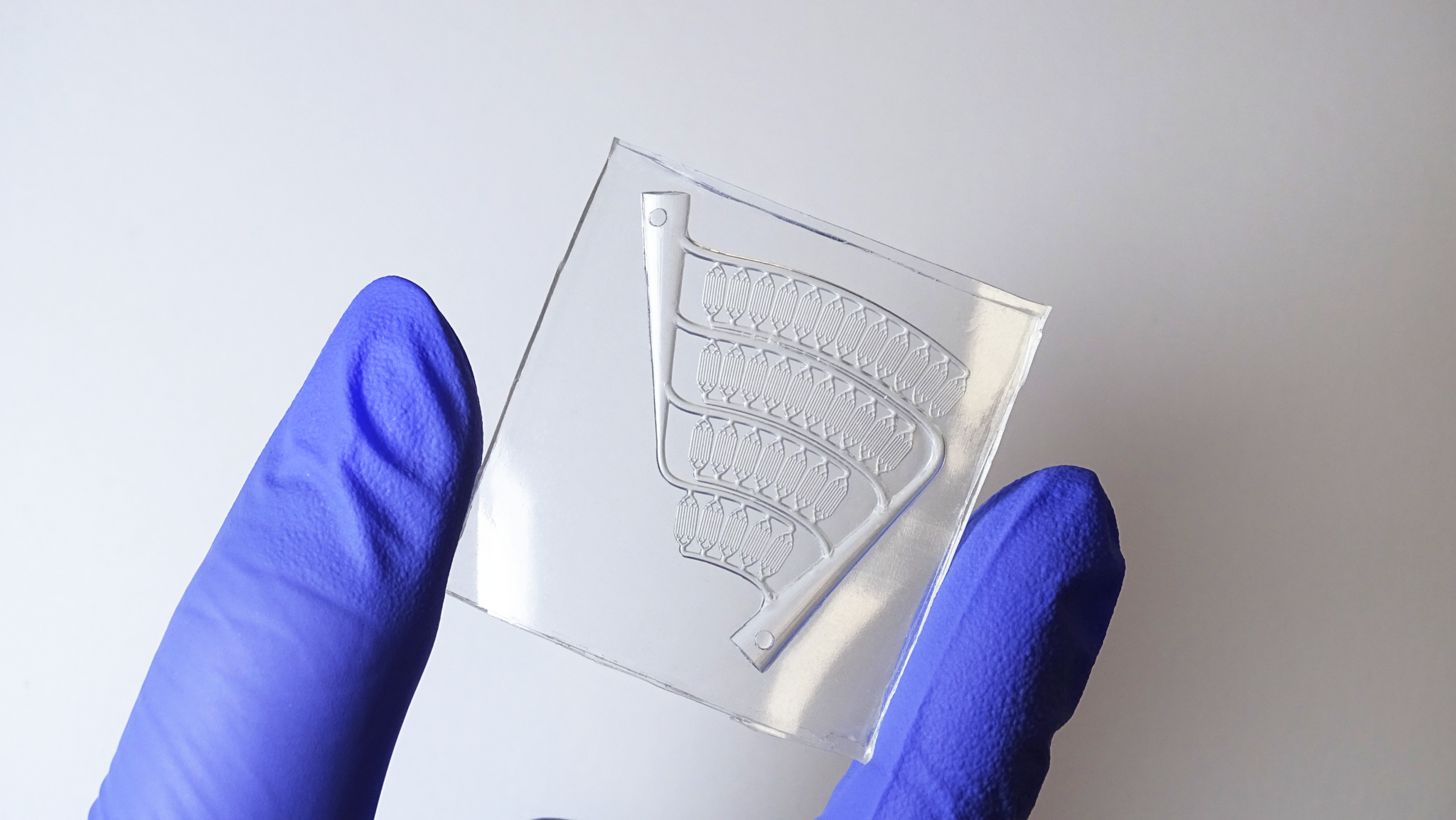
“How much does a microfluidic chip cost?” is one of the most common questions asked by researchers writing grant proposals, engineers building cost models, and startup founders forecasting unit economics. The honest answer is “it depends”, on at least six major variables. But vague answers don’t help you budget, so here are real numbers.
A single microfluidic chip can cost anywhere from less than $1 to over $500, depending on the material, fabrication method, design complexity, and production volume. A PDMS prototype typically costs $30–$80 per chip when you factor in labor, cleanroom time, and mold amortization, not just the $2–$5 in raw silicone. Thermoplastic chips made via hot embossing range from $5–$30 at prototype scale and drop below $1 per unit at mass production volumes via injection molding. Paper-based chips can cost under $0.10 in materials but are limited to simple assays.
The gap between “material cost” and “true cost” is where most budgets go wrong. Below, we break down every cost factor with comparison tables, worked examples, and practical tips, whether you’re fabricating 50 chips a year or planning a 100,000-unit run.
The 6 Factors That Determine Microfluidic Chip Cost
Before diving into specific numbers, understand the six cost categories. Their relative weight shifts dramatically depending on whether you’re making 10 chips or 10,000.
- Material cost : The raw polymer, glass, or paper that forms your chip substrate.
- Mold / master fabrication cost : The photolithography mask, silicon wafer, or CNC-machined tool that defines your channel geometry.
- Chip fabrication method & equipment : The capital equipment (CapEx) and consumables required by your chosen process.
- Labor & time : Hands-on operator time per chip, from mixing and degassing to alignment and bonding.
- Cleanroom & facility overhead : Access fees, maintenance, and the opportunity cost of limited availability.
- Production volume (economies of scale) : The single most powerful lever on per-chip cost.
Each section below digs into these factors with specific dollar ranges so you can build your own cost model.
Material Costs Compared
Raw material cost per chip is the number most people ask about first, and it’s the most misleading. Still, it’s a useful starting point.
PDMS (Sylgard 184) remains the most widely used material in academic microfluidics. A standard 1.1 kg kit costs roughly $80–$120 (€75–€110) and yields approximately 30–50 chips depending on thickness and device size, putting raw material cost at around $2–$5 per chip. However, PDMS requires a cleanroom-fabricated SU-8 mold, a plasma bonder for sealing, and 4–6 hours of manual processing per batch, costs we’ll address shortly.
Glass and silicon substrates are used for applications demanding chemical resistance or optical clarity. A 4-inch borosilicate wafer runs $15–$40, and processing (etching, drilling, bonding) adds considerably more. Finished glass chips from commercial suppliers often cost $50–$500+ each, depending on complexity.
PMMA (acrylic) and cyclic olefin polymers (COC/COP) are rigid thermoplastics increasingly favored for their optical clarity, chemical resistance, and compatibility with injection molding. Sheet or pellet costs translate to roughly $0.50–$5 per chip in raw material.
Flexdym™ (SEBS thermoplastic elastomer) offers material costs in the range of $0,20–$4 per chip from sheet stock. Crucially, Flexdym bonds reversibly at room temperature without plasma treatment, and the same base polymer is available as sheets, rolls, and pellets, enabling a seamless transition from prototyping to mass production without changing materials.
Paper-based substrates offer the lowest material cost at well under $0.10 per chip, making them attractive for high-volume point-of-care diagnostics in low-resource settings. However, paper chips are limited to relatively simple channel geometries and capillary-driven flow.
Material Cost Comparison Table
| Material | Raw Cost per Chip | Cleanroom Required? | Bonding Equipment Needed? | Scalable to Production? |
|---|---|---|---|---|
| PDMS (Sylgard 184) | $2–$5 | Yes (for mold fabrication) | Plasma bonder ($5K–$50K) | No (manual process) |
| Glass / Silicon | $10–$50+ | Yes | Thermal or anodic bonder | Limited |
| PMMA (acrylic) | $0.50–$3 | No | Solvent or thermal bonding | Yes (injection molding) |
| COC / COP | $1–$5 | No | Thermal or UV bonding | Yes (injection molding) |
| Flexdym™ (SEBS) | $0,20–$4 | No | None (room-temp self-bonding) | Yes (hot embossing, R2R, injection) |
| Paper | < $0.10 | No | Wax printing / lamination | Yes (printing) |
The critical takeaway: raw material cost is often less than 10% of the true per-chip cost at prototype scale. The real expenses hide in the infrastructure, equipment, and labor required to turn that material into a finished, sealed, functional device.
The Hidden Costs Most Researchers Forget
This is the section that could save you thousands of dollars a year. When researchers quote “microfluidic chip cost,” they almost always mean material cost. But the true cost of fabricating a microfluidic device includes a long list of expenses that rarely appear in methods papers.
Cleanroom access fees at most universities range from $50–$200 per hour, and a typical soft lithography session for mold fabrication takes 3–6 hours. If you need to build a cleanroom, costs start at $500K and climb quickly above $1M. Even if your institution provides access, slots are limited and scheduling delays add hidden costs to project timelines.
Mold fabrication is one of the largest recurring expenses. An SU-8 photolithography mold on a silicon wafer costs $200–$8,000+ per design, depending on feature resolution, number of layers, and whether you fabricate in-house or outsource. Silicon wafers are fragile : a single crack means re-fabricating the entire master at full cost. Each new design iteration requires a new mold. Over the life of a typical PhD project with 5–10 design iterations, mold costs alone can exceed $8,000. This is precisely the problem Epoxym™ was designed to solve: replicate a fragile silicon master into a durable epoxy mold that lasts hundreds of embossing cycles, protecting your investment and cutting iteration costs.
Plasma bonding equipment is required to seal PDMS to glass. A basic handheld plasma unit starts around $5K, while a high-quality oxygen plasma system suitable for consistent research results costs $15K–$50K. This equipment is not needed for thermoplastic elastomers like Flexdym, which achieves reversible bonding at room temperature without any surface treatment.
CAD and simulation software licenses for microfluidic design (COMSOL, AutoCAD, SolidWorks) run $5,000–$20,000 per year. A free alternative is FLUI’DEVICE, an online platform for designing, simulating, and exporting microfluidic layouts.
Labor time is the hidden giant. A single PDMS fabrication cycle, weighing and mixing the base and curing agent, degassing under vacuum for 30–60 minutes, pouring onto the mold, curing for 2–4 hours (or overnight), peeling, punching inlet/outlet ports, cleaning, plasma treating, and aligning for bonding, takes 4–6 hours of elapsed time with roughly 1–2 hours of hands-on labor. By comparison, hot embossing a chip from Flexdym with Sublym takes 2–10 minutes from start to finished, bonded device.
Failed chips and wasted material are an underappreciated cost. Bonding failures, leaks at inlet ports, and alignment errors are common in PDMS workflows. Published failure rates vary, but 10–30% waste is not unusual for researchers early in their training. Because Flexdym bonding is reversible, a misaligned or leaking chip can be separated, re-aligned, and re-bonded : recovering both the chip and the time invested.
Iteration cost compounds all of the above. Every design change in a soft lithography workflow means fabricating a new SU-8 mold ($2000+), waiting for cleanroom access, and running another full fabrication cycle. With durable epoxy replica molds and rapid hot embossing, the cost and time per iteration drop by an order of magnitude.
Worked Example: The True Annual Cost of PDMS vs. Flexdym for an Academic Lab
Let’s say a PhD student fabricates 20 PDMS chips per month (240 per year) across 3 design iterations. Here’s what that actually costs:
PDMS Pathway:
| Cost Item | Calculation | Annual Cost |
|---|---|---|
| PDMS material (Sylgard 184) | 240 chips × ~$3.50/chip | $840 |
| SU-8 molds (3 designs) | 3 × $700 avg. | $2,100 |
| Cleanroom access (mold fab) | 3 sessions × 4 hrs × $100/hr | $1,200 |
| Cleanroom access (ongoing) | 12 months × 2 hrs × $100/hr | $2,400 |
| Plasma bonder amortization | $25,000 ÷ 5 yrs | $5,000 |
| Glass slides (bonding substrates) | 240 × $1 | $240 |
| Labor (researcher time) | 240 chips × 1.5 hrs × $25/hr | $9,000 |
| Wasted chips (~20% failure rate) | ~48 chips × $3.50 material | $168 |
| Total | ~$20,950 |
Flexdym + Sublym Pathway:
| Cost Item | Calculation | Annual Cost |
|---|---|---|
| Flexdym material | 240 chips × ~$2.50/chip | $600 |
| Epoxym replica molds (3 designs) | 3 × ~$150 (from 1 silicon master) | $450 |
| Initial silicon master | 1 × $700 (replicated via Epoxym) | $700 |
| Sublym machine amortization | ~$X,XXX ÷ 5 yrs | ~$1,000–$2,000 |
| No cleanroom access needed | — | $0 |
| No plasma bonder needed | — | $0 |
| Labor (researcher time) | 240 chips × 0.25 hrs × $25/hr | $1,500 |
| Wasted chips (near-zero with reversible bonding) | minimal | ~$50 |
| Total | ~$4,300–$5,300 |
Estimated savings: 70–80%, plus hundreds of hours of researcher time recovered. To estimate your own savings with more precision, try Eden’s ROI calculator.
Cost by Fabrication Method
The fabrication method you choose determines both your capital investment and your per-chip cost trajectory as volume grows. Here’s a comparative overview of the most common microfluidic device fabrication methods.
Soft lithography (PDMS) is the academic workhorse. If your institution has cleanroom access and a plasma bonder, marginal equipment cost is low. But per-chip costs remain high because every chip requires manual casting, curing, peeling, and bonding. The process does not scale : 10,000 chips means 10,000 individual craft operations.
Hot embossing stamps microfluidic patterns from a mold into thermoplastic sheets using heat and pressure. Equipment ranges from industrial machines ($50K–$500K+) to portable benchtop systems like Sublym™, priced at a fraction of conventional embossers. Cycle times are 1–10 minutes. The same mold geometry and material (Flexdym) used on a benchtop Sublym can transfer to industrial hot embossing or roll-to-roll production.
CNC micro-milling machines channels directly into rigid plastics (PMMA, polycarbonate). Equipment costs range from $10K–$100K, and per-chip costs run $20–$100 depending on complexity. It’s useful for rapid prototyping of rigid-plastic designs, but is too slow for production.
3D printing (SLA/DLP) has improved rapidly but still faces resolution limits (~50–100 µm for most affordable printers) and material biocompatibility concerns. Equipment costs $5K–$50K, with per-chip costs of $5–$50. Best suited for rapid iteration on non-critical prototypes.
Injection molding is the gold standard for microfluidic manufacturing at scale. Mold tools cost $20,000–$100,000+, but per-chip costs drop to $0.20–$1 at volumes above 100,000 units. The catch: the design must be finalized before committing to expensive steel tooling. Having prototyped in the same material (e.g., Flexdym pellets for injection, after validating with Flexdym sheets on a hot embosser) eliminates costly surprises. Read more about the pathway from design to mass production.
Roll-to-roll (R2R) embossing is an industrial-scale continuous process capable of sub-$0.50 per chip at very high volumes (millions of units). Capital investment is $500K+ and is only justified for mature, high-volume products like commercial diagnostic test strips.
Laser ablation and xurography (cutting plotter) offer low-CapEx entry points ($1K–$15K) and per-chip costs of $5–$20. Resolution is limited to relatively large features (~50–200 µm), making these methods suitable for simple channel designs and rapid prototyping.
Fabrication Method Cost Comparison Table
| Method | Equipment Cost | Cost/Chip (10 units) | Cost/Chip (1,000 units) | Cost/Chip (100,000 units) | Cycle Time |
|---|---|---|---|---|---|
| Soft lithography (PDMS) | $5K–$50K* | $30–$80 | $15–$40 | N/A (not scalable) | 4–8 hrs/batch |
| Hot embossing (Sublym™) | Low (fraction of industrial) | $5–$15 | $2–$5 | $0.50–$2 | 2–10 min |
| CNC micro-milling | $10K–$100K | $20–$100 | $15–$50 | N/A (too slow) | 15–60 min |
| 3D printing (SLA/DLP) | $5K–$50K | $10–$50 | $5–$20 | N/A (too slow) | 1–4 hrs |
| Injection molding | $20K–$100K (tool) | N/A (min. order) | $2–$10 | $0.20–$1 | Seconds |
| Roll-to-roll embossing | $500K+ | N/A | N/A | $0.10–$0.50 | Continuous |
| Laser ablation / Xurography | $1K–$15K | $5–$20 | $3–$15 | N/A | 5–30 min |
*Includes cleanroom access and plasma bonder costs amortized over typical academic usage.
Cost at Scale : From Prototype to Mass Production
The per-chip cost curve in microfluidics follows a familiar pattern: it drops steeply with volume, but only if your fabrication method can actually scale. This is where many projects hit what the industry calls the “valley of death” in microfluidic commercialization.
The problem looks like this: a research team develops a PDMS-based lab-on-a-chip device, publishes, and spins out a startup. Now they need 1,000–10,000 chips for clinical validation. Soft lithography can’t do it. Injection molding could, but the $50K+ tooling requires a finalized design, and switching from PDMS to a rigid thermoplastic means redesigning, re-validating, and potentially re-submitting for regulatory approval. This material switch can add 6–18 months and $50,000–$200,000+ to the timeline.
Hot embossing with a scalable thermoplastic material bridges this gap. With Flexdym, the same base polymer is used at every stage: sheets for prototyping on a benchtop Sublym, sheets or rolls for pilot production on an industrial hot embosser, and pellets for high-volume injection molding. There is no material change, no device redesign, and — critically for diagnostics and medical devices — no need to re-validate biocompatibility at each production stage. Flexdym is already certified to ISO 10993 and USP Class VI, and that certification carries forward.
For companies planning a point-of-care diagnostic scale-up, this material continuity can be the difference between a 12-month and a 30-month time to market.
How to Reduce Your Microfluidic Chip Cost: 7 Practical Tips
Whether you’re an academic researcher or a product development team, these strategies can meaningfully reduce your microfluidic device fabrication cost.
1. Simulate before you fabricate. Every design error caught in simulation saves a physical fabrication cycle, and at $200+ per mold iteration, that adds up fast. FLUI’DEVICE is a free online platform for designing and simulating microfluidic circuits before committing to fabrication.
2. Choose a scalable material from day one. Starting with PDMS and switching to a thermoplastic at production scale adds months of redesign, re-validation, and re-testing. Choosing a material like Flexdym that spans prototyping through injection molding eliminates this transition cost entirely. A material selector tool can help you make this decision early.
3. Replicate your molds. Your $700–$2,000 silicon master is fragile. Rather than risking it in daily use, replicate it into a durable epoxy copy using Epoxym™. Epoxy replica molds can last hundreds of embossing cycles, and if one wears out, you still have the original master to make another.
4. Eliminate cleanroom dependency. Hot embossing with Sublym™ works on any standard laboratory benchtop. Moving chip fabrication out of the cleanroom saves $50–$200 per hour in access fees and removes scheduling bottlenecks.
5. Bond without a plasma bonder. Plasma treatment equipment costs $5,000–$50,000, requires training, and introduces a time-sensitive step (you typically have 1–2 minutes to align and bond after plasma activation). Flexdym’s room-temperature reversible bonding eliminates this equipment cost and the failure mode entirely.
6. Recover from mistakes, reuse and re-mold. Flexdym can be separated after bonding, re-aligned, and re-bonded. If a chip is beyond recovery, the material can be re-molded. PDMS, once cured and bonded, cannot be reused. At a 15–20% failure rate typical of student fabrication, this recoverability alone saves hundreds of dollars per year.
7. Plan your production pathway early. Before finalizing your chip design, consult with a fabrication partner about scale-up. Minor design changes made early (e.g., draft angles for demolding, feature aspect ratios compatible with injection molding) can save tens of thousands of dollars later. Eden’s FLUI’MOLD custom mold service can advise on design-for-manufacturing considerations.
Real-World Cost Examples
Scenario 1: Academic Researcher : 50 chips/year, 3 design iterations
A typical early-stage PhD project focused on developing a new microfluidic assay.
| PDMS Pathway | Flexdym + Sublym Pathway | |
|---|---|---|
| Material | $175 (50 × $3.50) | $125 (50 × $2.50) |
| Molds | $2,100 (3 × $700 SU-8) | $850 (1 master + 3 Epoxym replicas) |
| Cleanroom hours | $1,600 (mold fab + access) | $0 |
| Equipment (amortized/yr) | $5,000 (plasma bonder share) | ~$1,000–$2,000 (Sublym share) |
| Labor | $1,875 (50 × 1.5 hrs × $25) | $310 (50 × 0.25 hrs × $25) |
| Failed chips (~20%) | $70 | ~$10 (reversible bonding) |
| Annual Total | ~$10,820 | ~$2,300–$3,300 |
| Savings | — | ~70–80% |
Scenario 2: Biotech Startup : 500 chips/year, transitioning to pilot production
A startup validating a diagnostic assay and preparing for small-batch clinical studies.
| Traditional (PDMS → outsource injection) | Flexdym Pathway (Sublym → industrial embossing → injection) | |
|---|---|---|
| Prototyping (200 chips) | ~$8,000 (PDMS soft lith.) | ~$5,000 (Flexdym + Sublym) |
| Pilot production (300 chips) | ~$35,000 (outsourced injection mold tool + redesign for new material) | ~$2,500 (industrial embossing, same material) |
| Re-validation for material switch | ~$15,000–$30,000 + 6–12 months | $0 (same material throughout) |
| Total Year 1 | ~$58,000–$73,000 | ~$7,500 + equipment |
| Time to pilot production | 12–18 months | 3–6 months |
Scenario 3: Diagnostics Company : 50,000+ chips/year, regulatory pathway
A company scaling a validated point-of-care test to commercial production.
| Injection molding with COC/COP | Injection molding with Flexdym pellets | |
|---|---|---|
| Injection mold tool | $50,000–$100,000 | $50,000–$100,000 |
| Per-chip cost (50K vol.) | $0.50–$2.00 | Comparable ($0.50–$2.00 range) |
| Material re-validation from R&D | Required (different polymer than R&D phase) | Not required (same Flexdym SEBS from prototype to production) |
| Regulatory re-submission risk | Moderate–High | Low (material continuity) |
| Estimated re-validation cost | $20,000–$50,000+ | $0 |
| Biocompatibility certification | Needs new testing | Already certified (ISO 10993, USP Class VI) |
At production scale, per-chip material costs converge across thermoplastics. The differentiator is total development cost and time, not unit price, and material continuity from R&D through production provides a measurable advantage.
FAQ : Microfluidic Chip Cost
How much does a single microfluidic chip cost? A single microfluidic chip costs anywhere from under $1 to over $500. At prototype scale, expect $15–$80 per chip including labor, materials, and equipment amortization. At mass production volumes (100,000+ units) via injection molding, chips cost $0.20–$2.00 each.
What is the cheapest way to make a microfluidic chip? For the absolute lowest material cost, paper-based microfluidic chips can be produced for under $0.10 each. For functional polymer chips, hot embossing of thermoplastics like Flexdym on a benchtop system offers the lowest total cost of prototyping, typically $5–$15 per chip with no cleanroom or plasma bonder required.
How much does it cost to prototype a microfluidic device? The cost of microfluidic prototyping depends heavily on infrastructure. A PDMS prototyping workflow including mold fabrication, cleanroom access, and plasma bonding typically costs $500–$3,000 for the first 10 chips of a new design. Hot embossing with a portable system like Sublym reduces this to roughly $200–$500 for the same batch.
Why are microfluidic chips expensive? Microfluidic chips appear expensive primarily because of hidden costs beyond raw materials: cleanroom access ($50–$200/hour), mold fabrication ($200–$2,000+ per design), specialized bonding equipment ($5K–$50K), and manual labor (1–6 hours per batch). Choosing fabrication methods that eliminate cleanroom dependency and expensive bonding equipment dramatically reduces total cost.
How much does a PDMS microfluidic chip cost to make? A PDMS chip costs approximately $2–$5 in raw material (Sylgard 184), but the true per-chip cost including mold amortization, cleanroom time, plasma bonding, and labor is typically $30–$80 at prototype scale. This cost does not decrease significantly with volume because the process is manual and not scalable. See our detailed comparison of PDMS alternatives for more context.
What is the cost of microfluidic injection molding? Injection molding requires a steel mold tool costing $20,000–$100,000+ depending on cavity count and feature complexity. Once the tool is made, per-chip costs drop to $0.20–$2.00 at volumes above 50,000 units. Injection molding is not economical below ~1,000–5,000 units due to minimum order requirements and tooling amortization.
How do I reduce microfluidic fabrication costs? The most impactful strategies are: (1) simulate designs digitally before fabricating to catch errors early, (2) choose a scalable material from day one to avoid costly material switches at production, (3) use durable replica molds instead of risking expensive silicon masters, and (4) eliminate cleanroom and plasma bonder dependency by using benchtop hot embossing with self-bonding thermoplastics.
Is it cheaper to buy or make microfluidic chips? For standard, off-the-shelf designs, buying from a commercial supplier ($50–$300 per chip) may be more practical for small quantities. For custom designs at volumes above ~50 chips/year, in-house fabrication is almost always cheaper, especially with benchtop systems that remove the need for cleanroom access. At volumes above 10,000 units/year, outsourced contract manufacturing via injection molding becomes the most economical option.
Conclusion
The cost of a microfluidic chip is never just the material, it’s the entire workflow: design iteration, mold fabrication, equipment amortization, facility overhead, labor, failure rates, and the often-invisible cost of switching materials at scale-up. Researchers and companies who optimize for total cost of ownership rather than raw material price save dramatically, not just in dollars, but in months of development time.
The single most impactful cost-reduction decision is choosing a material and fabrication method that scale without a technology switch. A workflow built on Flexdym and hot embossing carries seamlessly from benchtop prototyping through pilot production to injection molding, without requiring device redesign, material re-validation, or regulatory re-submission.
Ready to see what the switch would save you? Try Eden’s ROI calculator to estimate your lab’s specific cost reduction, or start designing your next device for free with FLUI’DEVICE.