Two-photon polymerization (2PP) laser printing·Compatible with PDMS soft lithography & hot embossing·No cleanroom required
Why choose a 2PP microfluidic mold over photolithography?
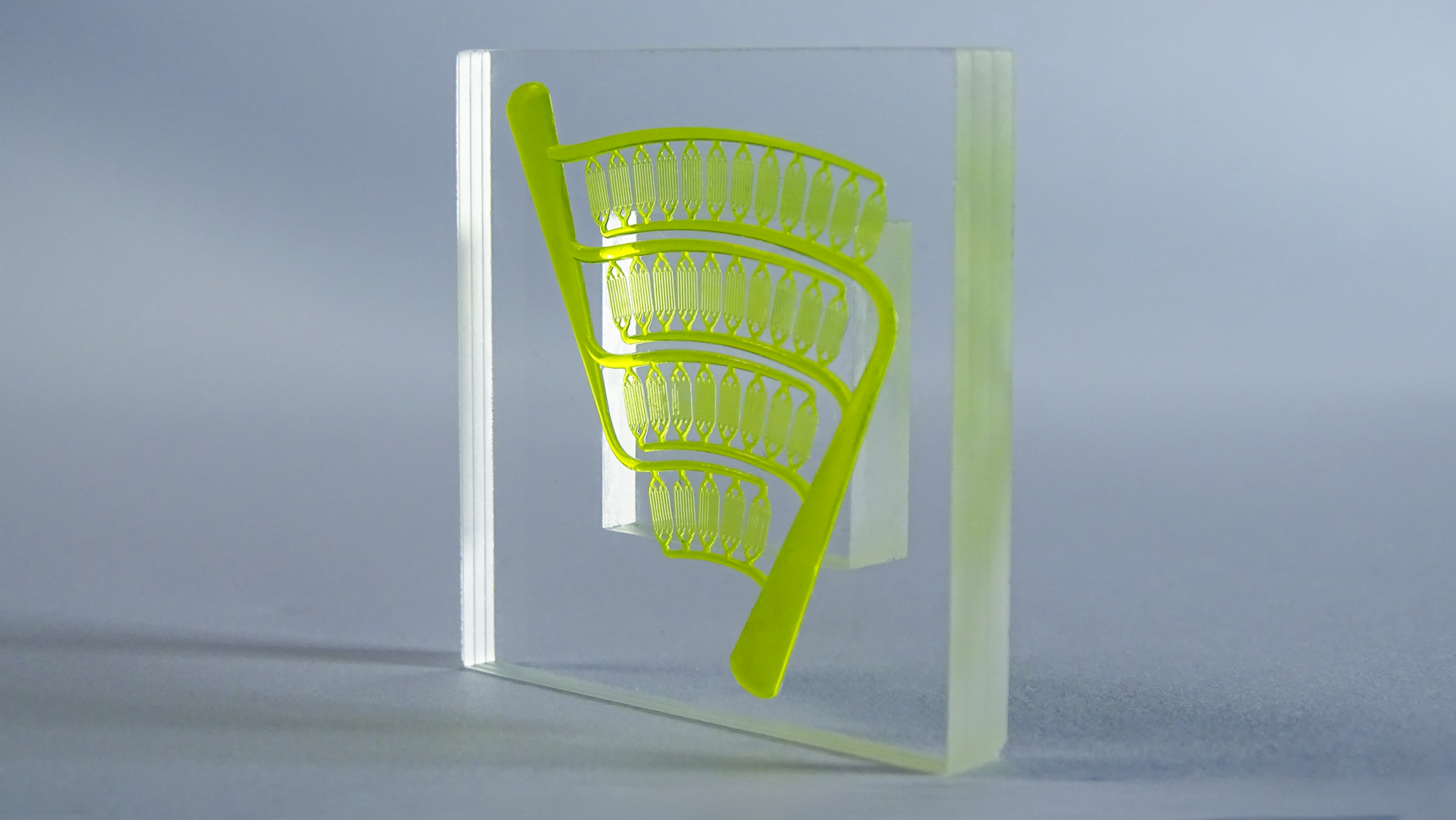
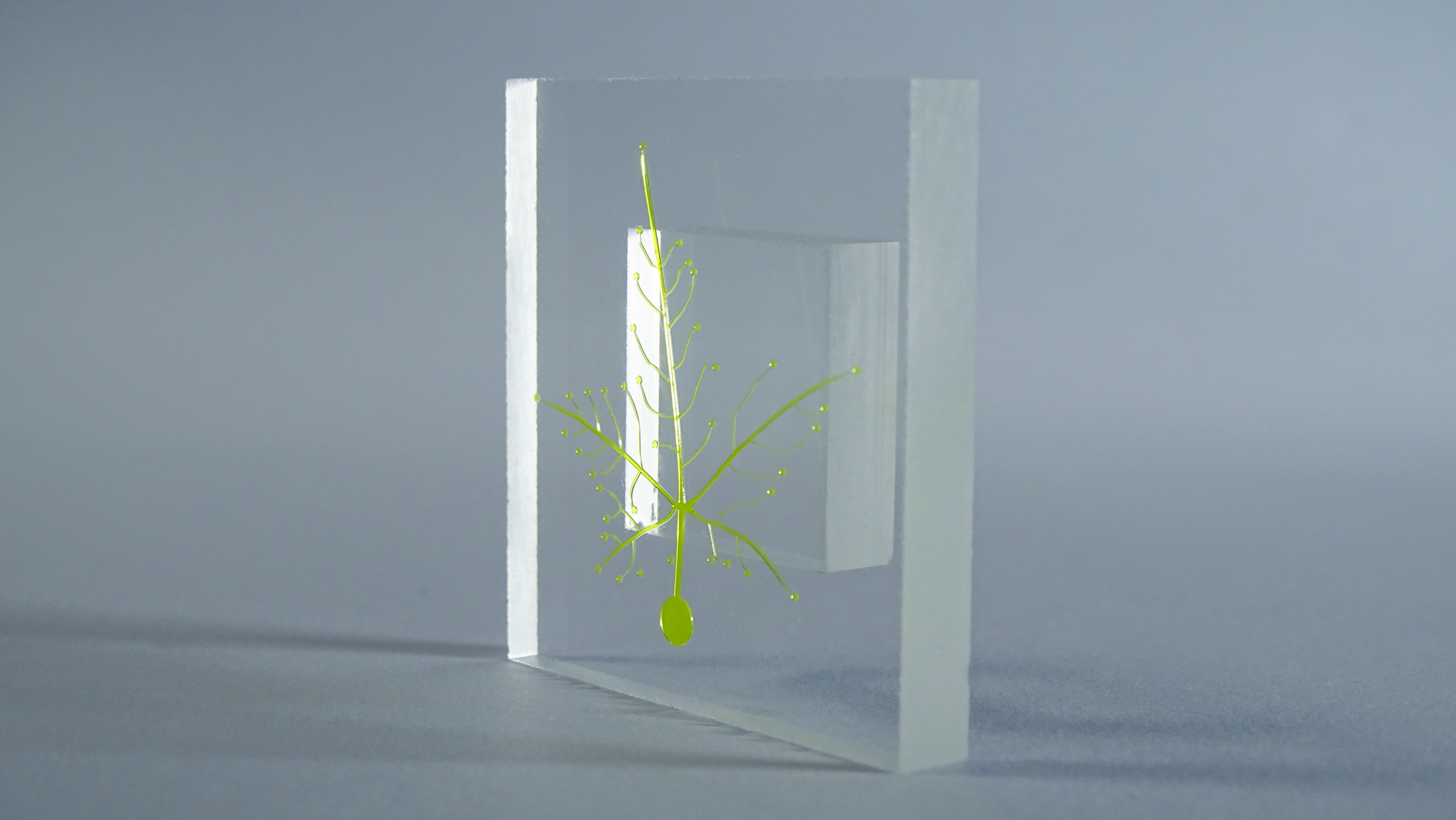
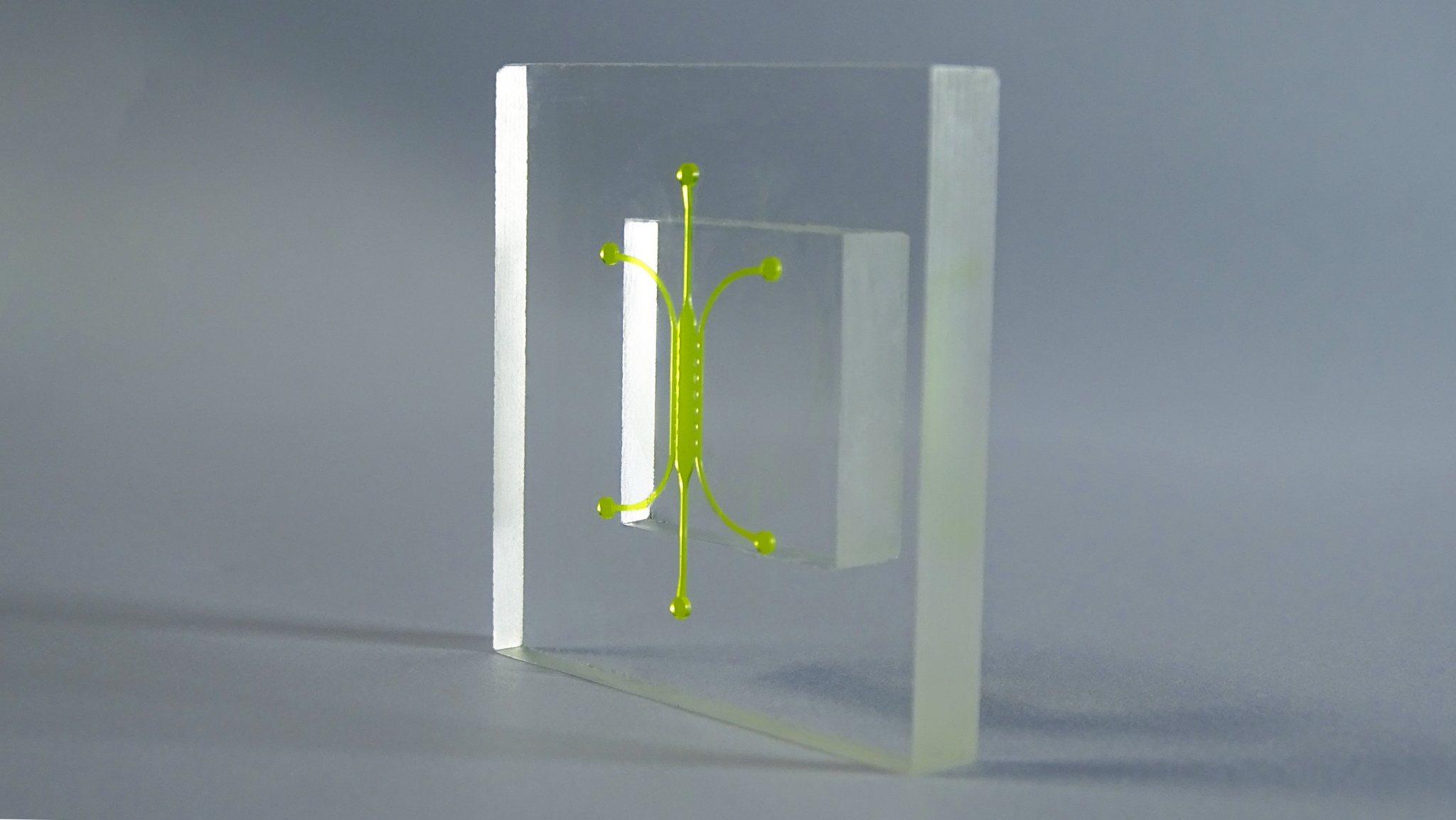
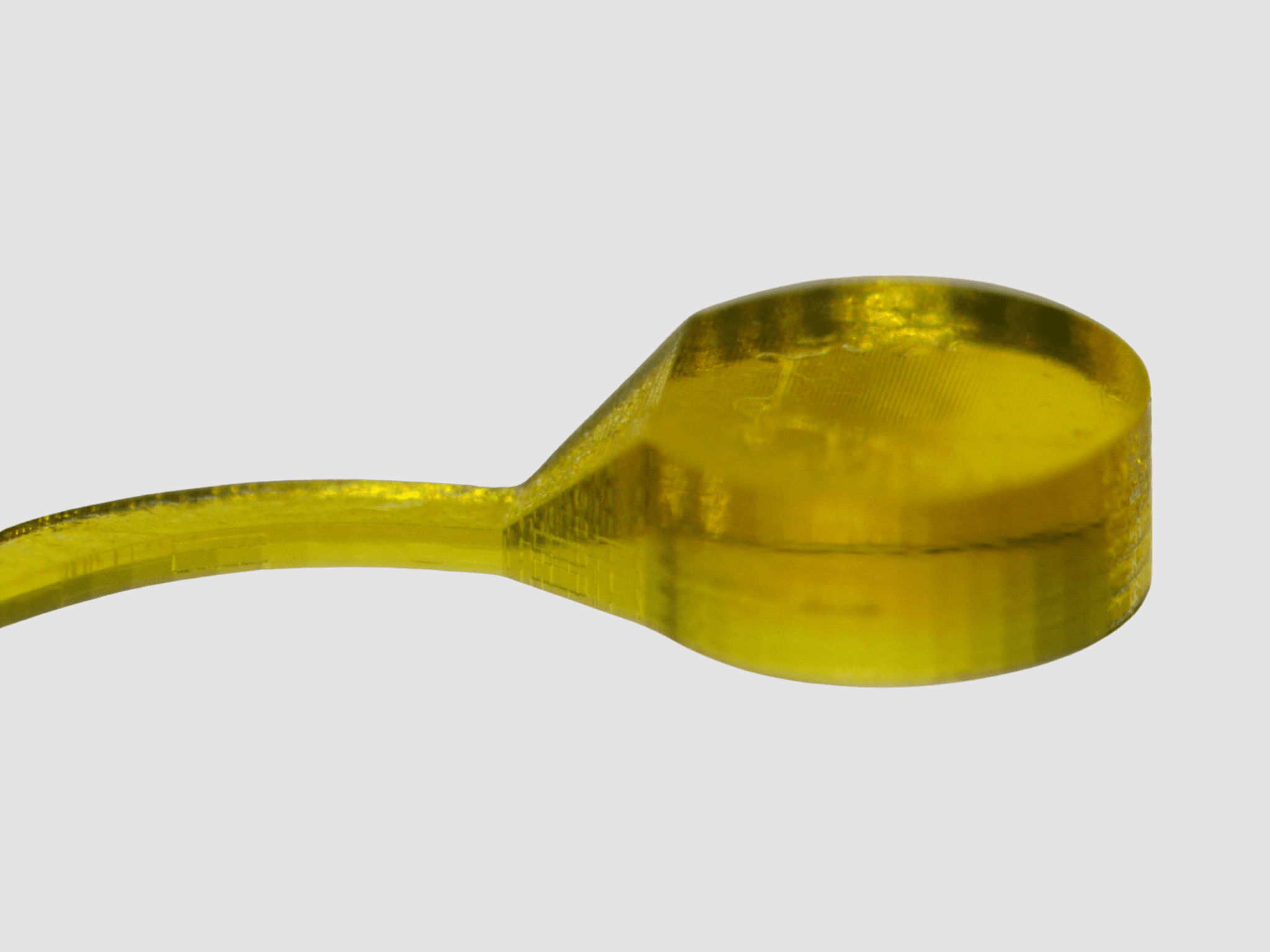
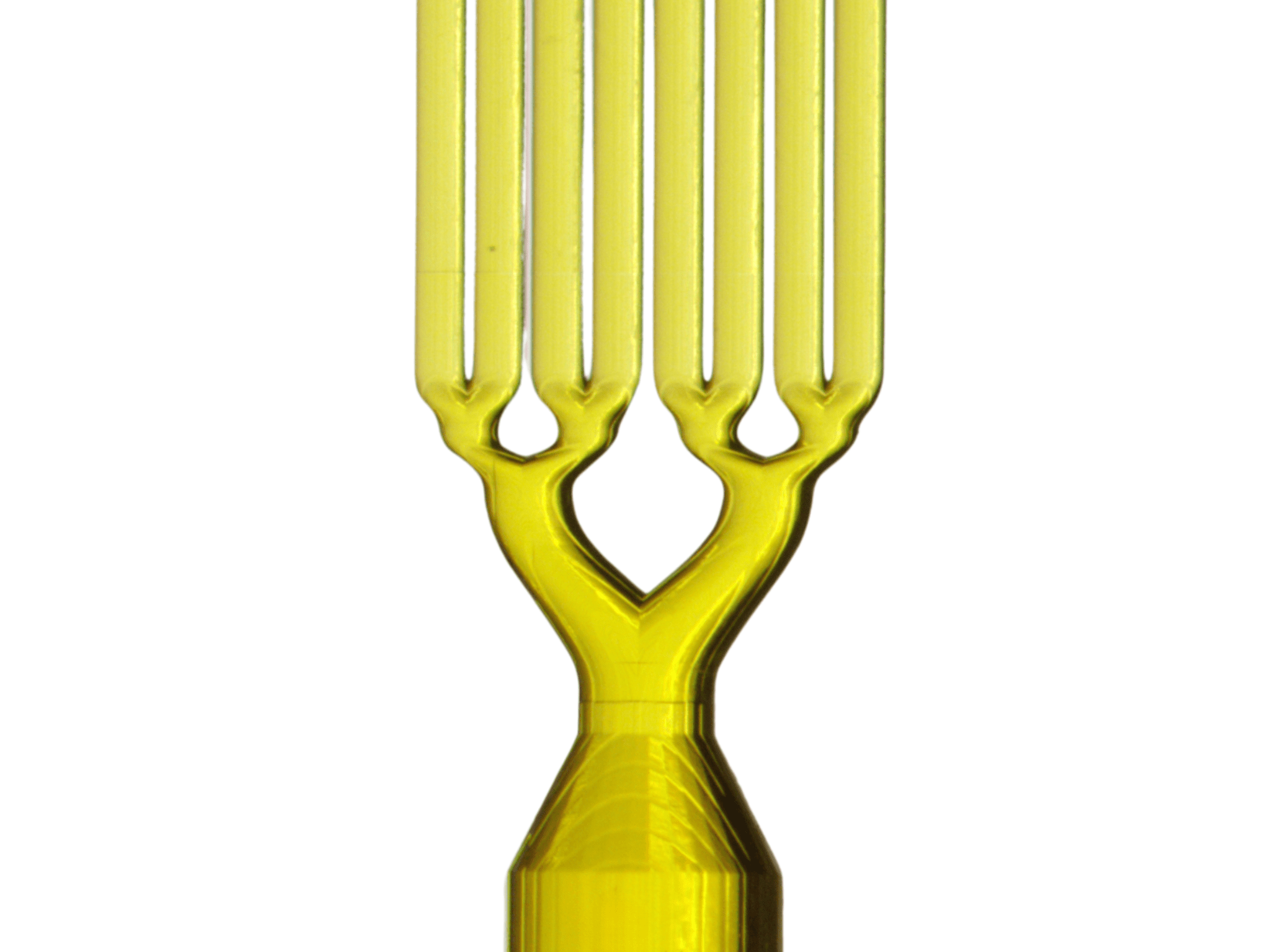
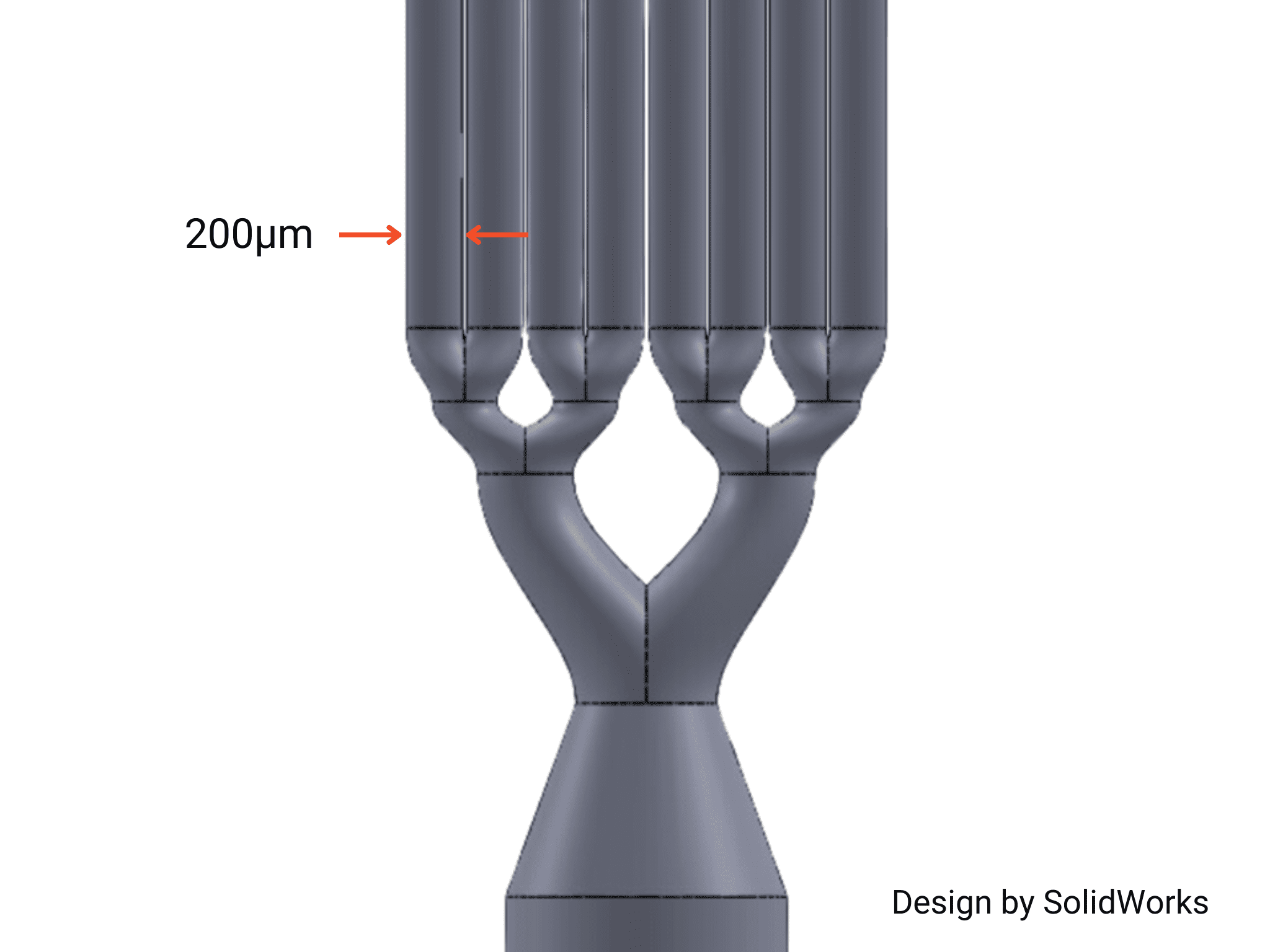
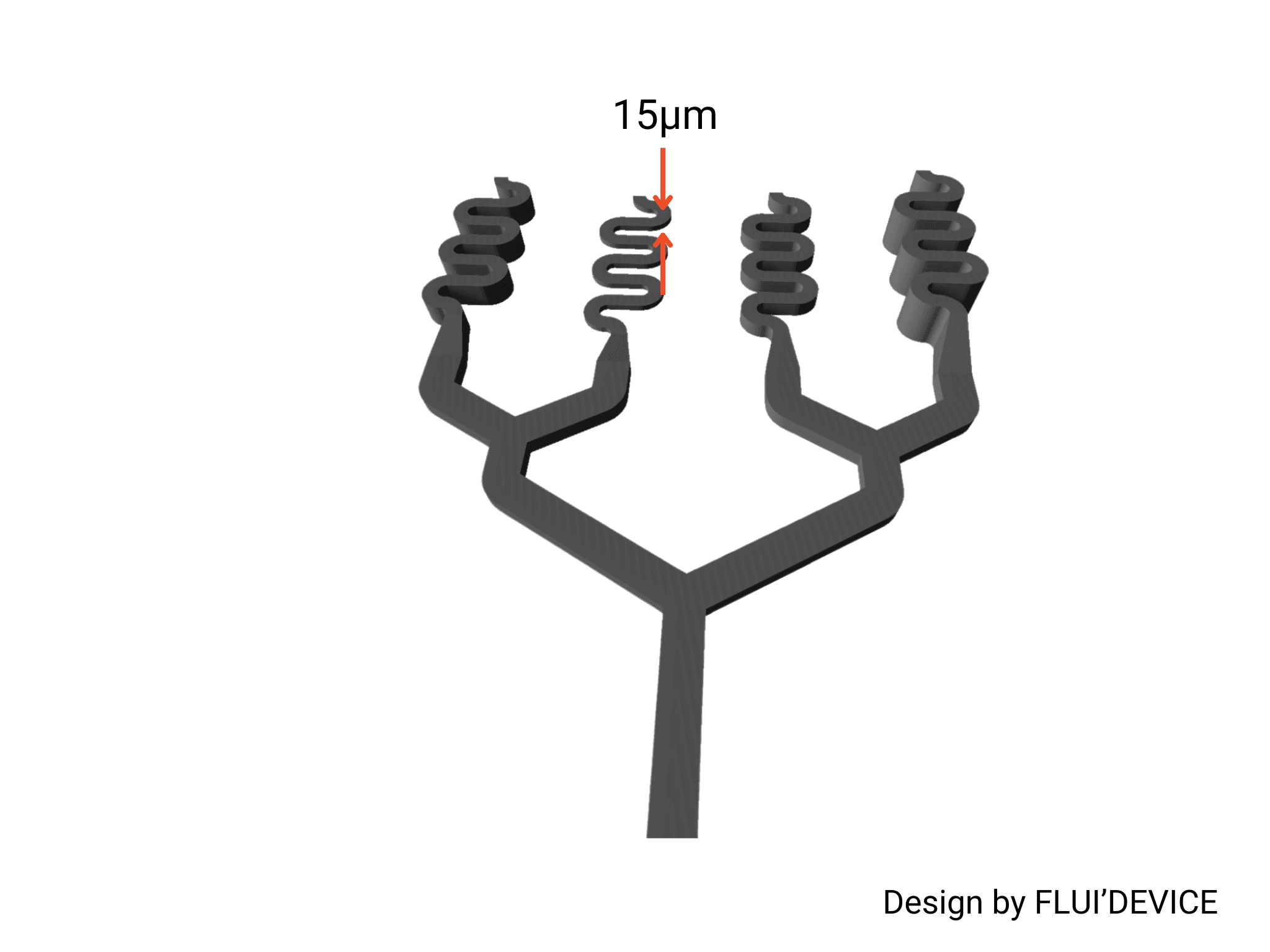
Traditional SU-8 photolithography produces high-resolution molds — but only with flat, extruded 2D profiles. It requires cleanroom access, multiple exposure steps for multi-height designs, and cannot create round or sloped channels. FLUI'MOLD uses two-photon polymerization (2PP) to print true 3D microfluidic molds directly from your CAD file, with continuously variable heights, circular cross-sections, and controlled slopes — all without a cleanroom.
FLUI'MOLD (2PP)
SU-8 photolitho
CNC micro-milling
SLA 3D print
Min. resolution
~1 µm
~1 µm
~50 µm
~25 µm
True 3D geometry
✓ Yes
✕ No
Limited
Limited
Round channels
✓ Yes
✕ No
✕ No
Rough
Slopes & bevels
✓ Yes
✕ No
Limited
Limited
Multi-height in 1 print
✓ Yes
Multiple steps
Yes
Yes
Cleanroom required
Not needed
Required
Not needed
Not needed
Delivery time
<4 weeks
Variable
1–2 weeks
1 week
PDMS soft lithography
✓ Compatible
Compatible
Compatible
With coating
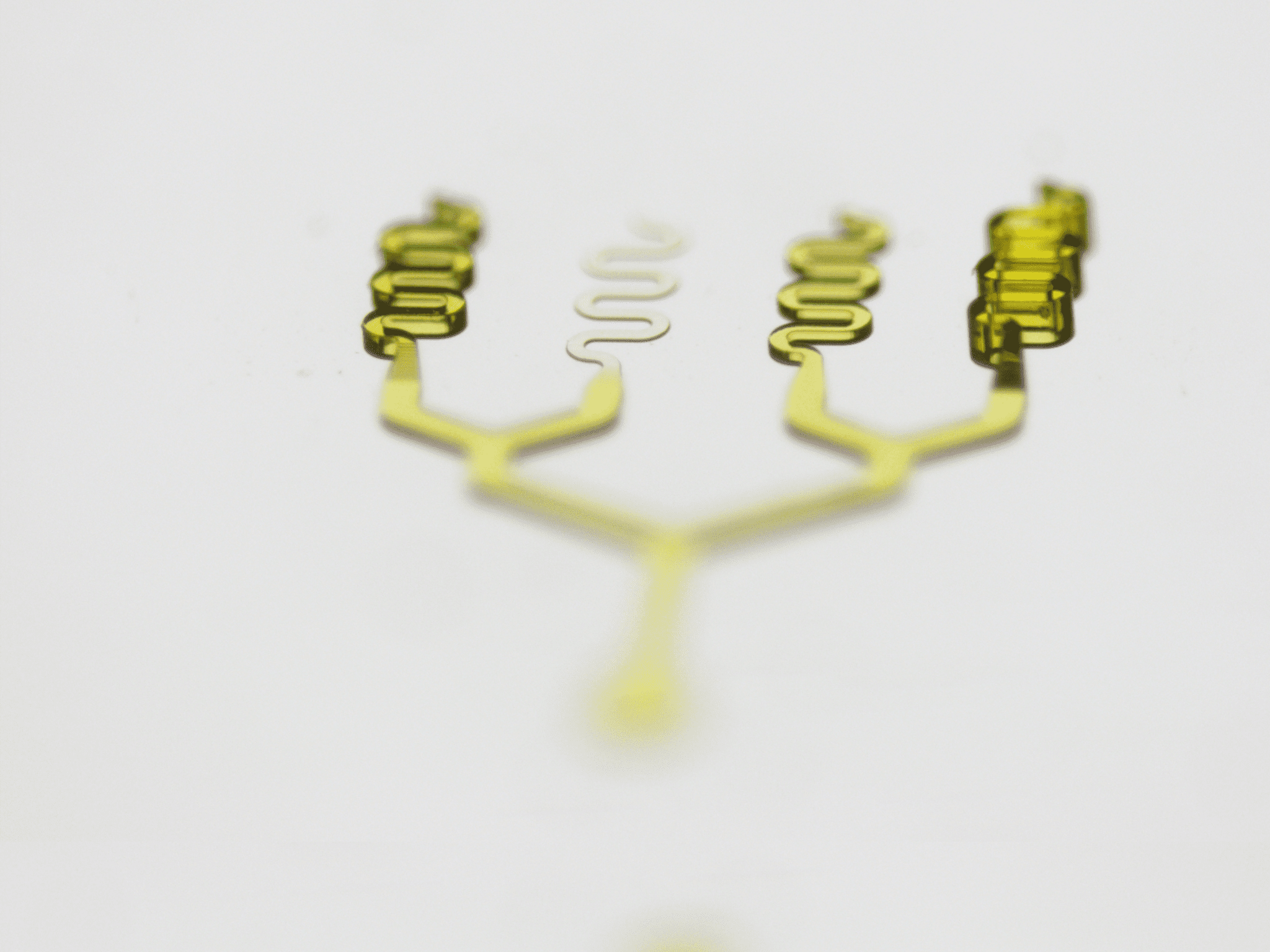
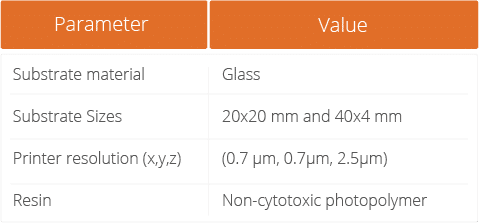
FLUI'MOLD molds are printed on a glass substrate (20×20 mm or 40×40 mm) using non-cytotoxic resin.
Compatible with PDMS soft lithography and epoxy resin replication for hot embossing (Flexdym, COC, PMMA).
Frequently asked questions about microfluidic mold fabrication
Most microfluidic designs are relatively small compared to a SU8 4” wafer. At Eden Tech, we focus on proposing new options, going beyond what photolithography can achieve, by printing very complex geometry for many application fields.
We currently propose a 40X40 and 20X20 mm mold printed with a non-cytotoxic resin on a glass substrate. However, to satisfy every customer needs, we are in the process of developing the 4” wafer mold while maintaining the same high resolution.
Both FLUI’MOLD and photolithography can achieve high-resolution fabrication (~1µm), but only our service provides seamless variations in microchannel height. With FLUI’MOLD you can refine your research by recreating complex geometries such as circular, sloped, or trapezoidal channels.
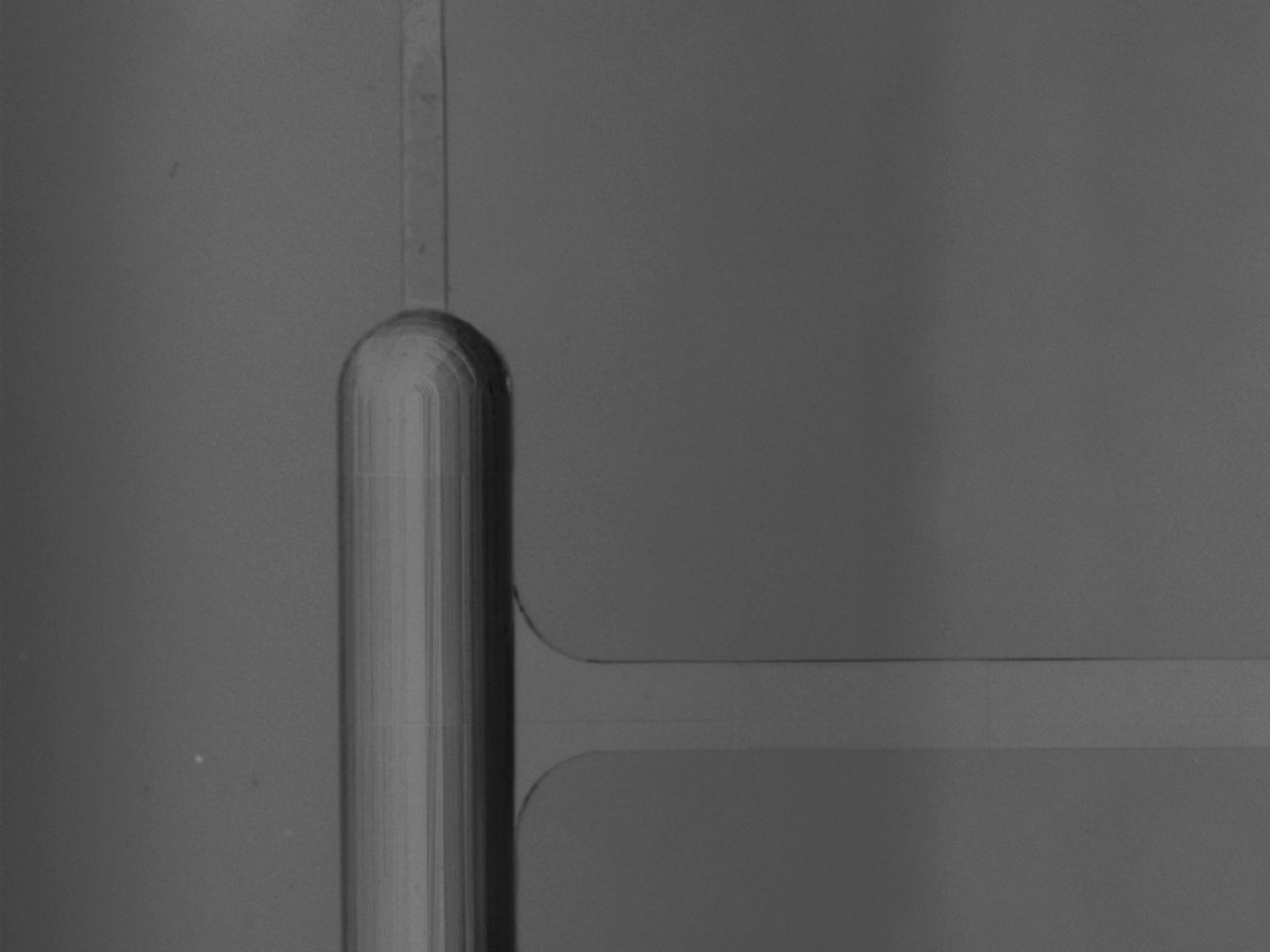
This level of precision enables new research opportunities, for instance in rheology where circular microchannels can accurately mimic blood microvessels, or in photonics, by printing µ-semi-circular channels to facilitate the embedding of the optical fibers in microfluidic channels and many more prospects. If you are interested in Contact Our Microfluidic Mold Service.
After mold fabrication, microfluidic devices can be fabricated through one of two main methods: soft lithography and hot embossing. In both cases, devices unmolding can become challenging if the design presents fragile structures, such as a high-aspect ratio.
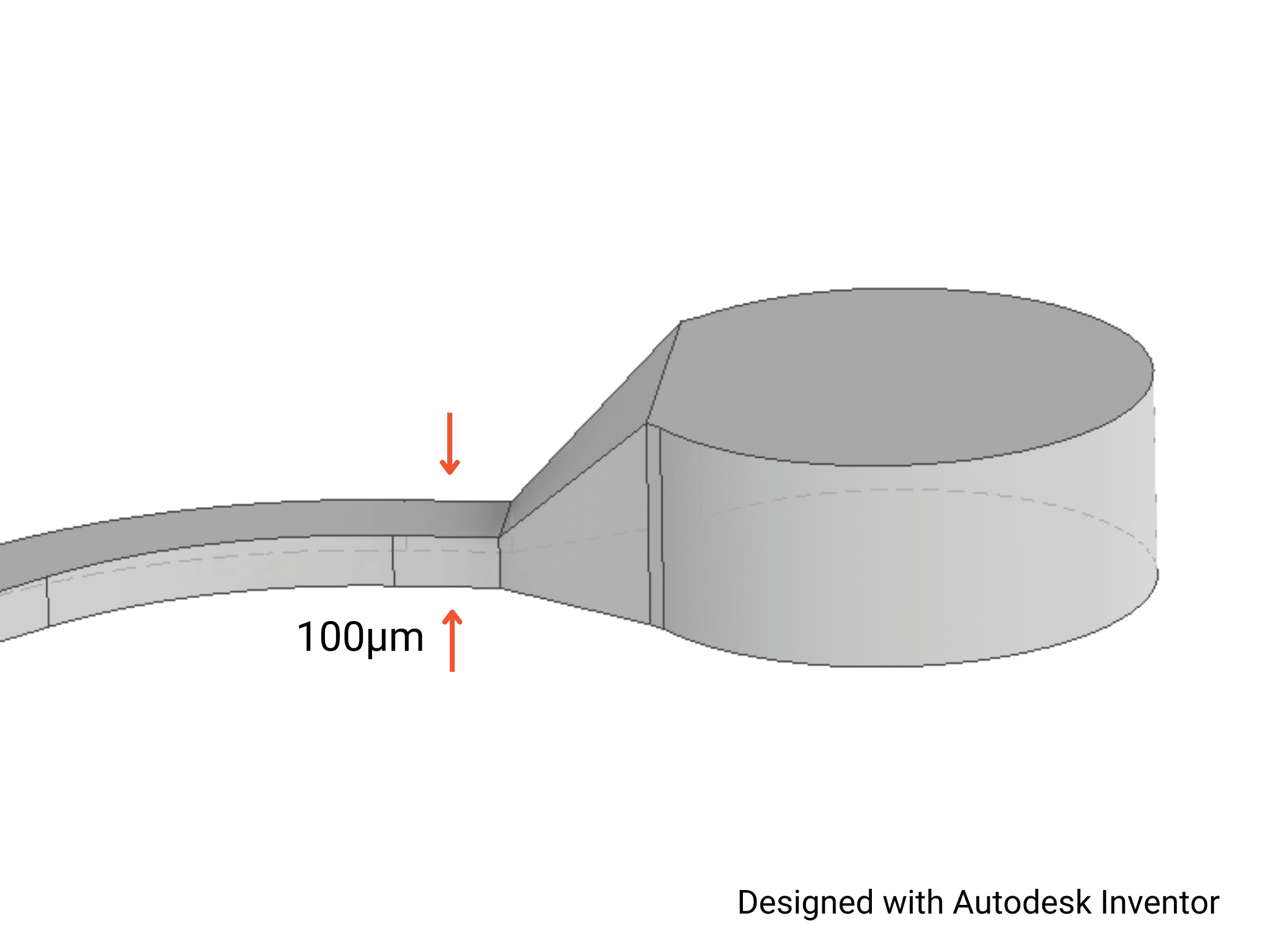
FLUI’MOLD uses 2PP technology which can print channels with highly precise angle slopes and create trapezoidal microchannels. This allows the integration of bevels in the design to enhance the stability of your mold during the demolding process of PDMS, Flexdym or other polymers.
Yes, we can. We can print structures with A/R of 1/100 and higher, however, to limit the risk of damaging your mold, we recommend maintaining your A/R below 1/5 for soft lithography and 1/3 for hot embossing.
FLUI’MOLD is indeed fully compatible with PDMS soft lithography. We recommend classical mold silanization before its first use. Contact Our Microfluidic Mold Service.
While molds made with FLUI’MOLD cannot withstand the high pressure and temperature required to achieve polymers or Flexdym hot embossing, is possible to generate an epoxy mold starting from FLUI’MOLD.